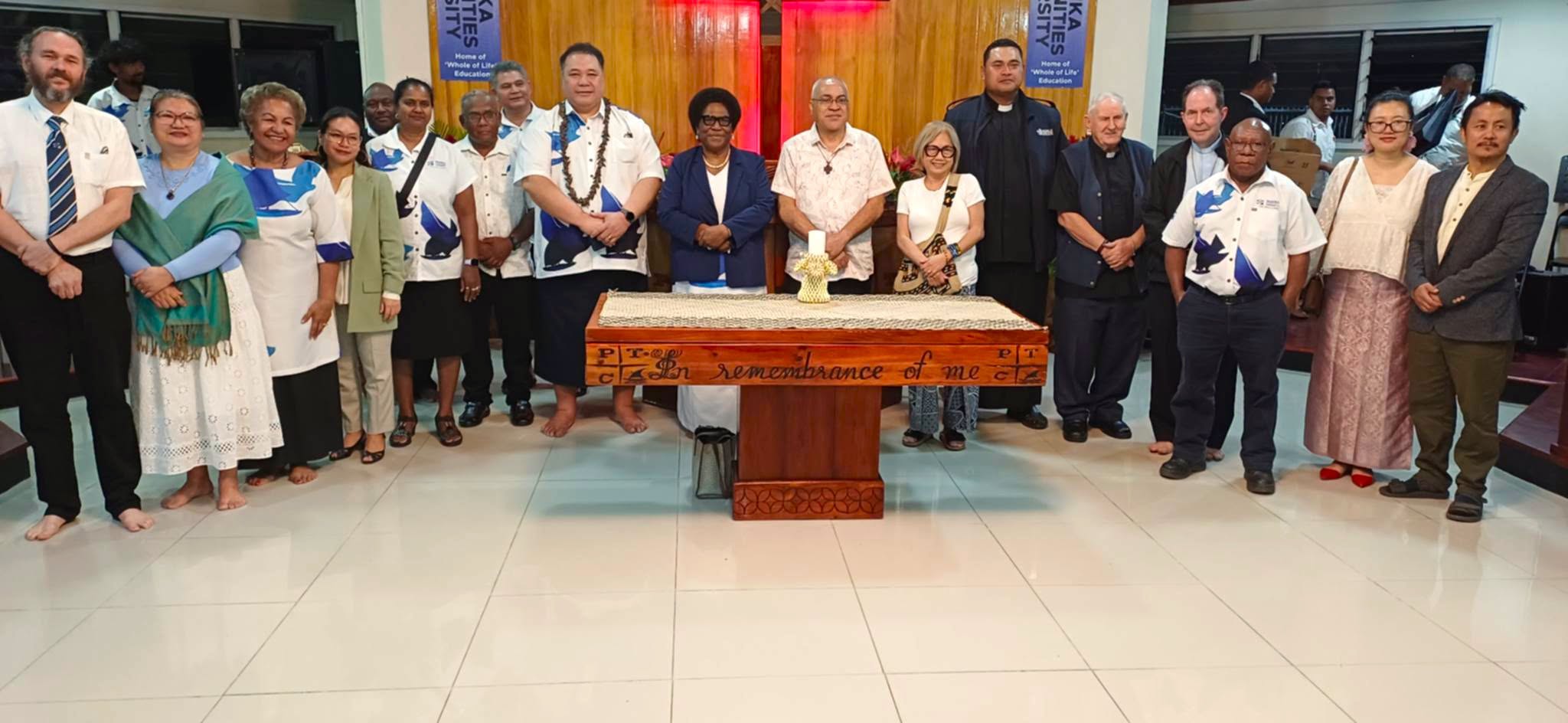
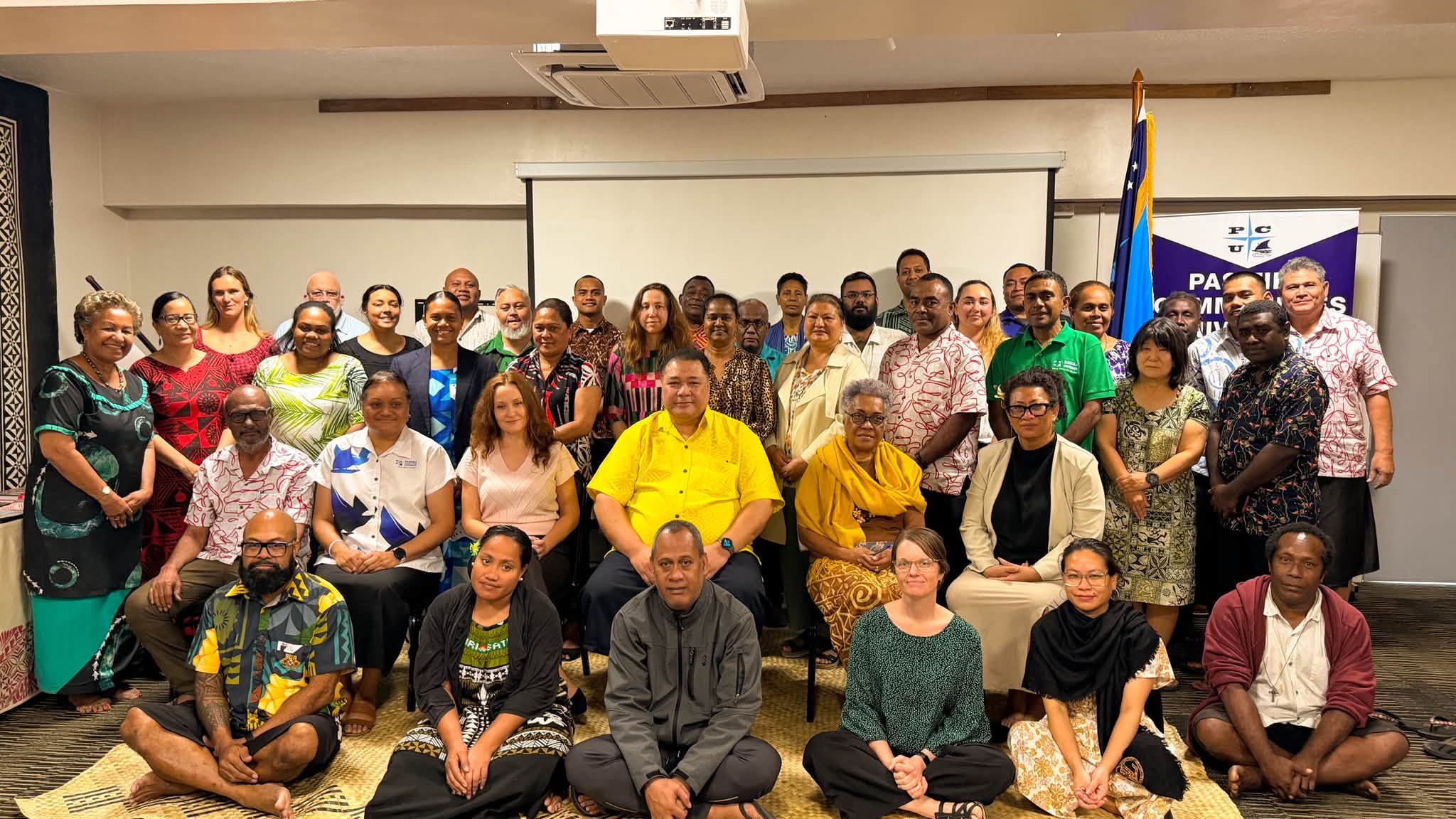
Today, the Manu Folau (Vice Chancellor), the Rev. Professor Upolu Luma Vaai, delivered a keynote address titled: “E uliuli le moana ae iloa ala o i’a⸺the ocean is deep yet paths of fishes are visible: Questions, Concerns, and the Future of the Pasifika Gender Story,” to officially open the second Think Tank for reSTORYing Gender Pasifika. The Manu Folau was concerned of “the lack of a clear articulation of the concept of gender from a Pasifika perspective…has led to the push back from Pasifika, including key stakeholders such as communities and churches. The question often raised by many is that, does Pasifika have a concept called gender? If it does, what does it look like? And how is it performed in the communities?”
In this address, he challenged the one dimensionality of the current gender narrative, and how Pasifika needs a more relational multidimensional story that centres on life for all. He said, “The greatest mistake made by many development agencies is either assuming that applying linear one-dimensional approaches to complex and multidimensional communities such as those in Pasifika would help develop them, or assuming that they can understand the ‘way of the fish’ or the ‘way of the community’ in just a few months of research. Because most were trained in a rational and scientific way of the ‘logic of the One’, many were not trained to see the imperceptible, the invisible, the spiritual, found beyond appearance, couched in relationships. I can also confidently say that many Pasifika people are not trained in this way.”
He continued, “When we live in communities that are complex and multifaceted, life is not rationally ordered in the Eurocentric way of the ‘logic of the One’. In these communities, life is integrated, interconnected, and mysterious grounded on relationships. But we must also not entertain the fact that when something is complex and obscure, it cannot be explained. While some things might be very difficult and complex for our learned minds to capture, but for those living in the communities, it is simply a lived experience. In other words, there is no shortcut to understanding the hidden ‘way of communities’ found in the complexity and multiple dynamics of Pasifika systems and structures. It is only by living in communities and engaging in these systems that we can understand how men, women, and other genders are part of the whole.”
This week, we gather the second Think Tank from all throughout Pasifika and diaspora to develop a Pasifika gender story that is more holistic and ground up, and develop a methodology for understanding and articulating gender.